AI in VET Assessment: Why the Human in the Loop Matters
The Promise and Pressure of AI in VET
Artificial intelligence has officially entered the vocational education and training sector. From drafting assessment tools to summarizing pages of student evidence, tools are popping up everywhere to save trainers time. Naturally, the conversation quickly shifts to marking. Can an algorithm grade a competency based assessment? The short answer is yes, but the better question is whether it should do so alone.
As regulatory bodies like ASQA emphasize quality and continuous improvement, the stakes for accurate assessment are higher than ever. When software starts evaluating student work, VET professionals often worry about losing the nuance that only an experienced trainer can provide. This is where the concept of human in the loop becomes essential.
Defining Human in the Loop in Assessment
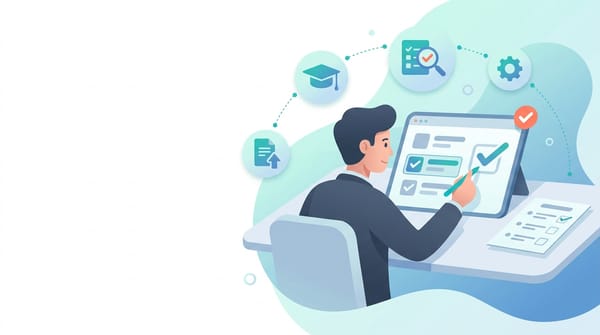
Human in the loop is not just a trendy tech phrase. In the context of VET, it means that while artificial intelligence can process, analyze, and suggest outcomes, a qualified human assessor retains absolute authority over the final judgment. The machine proposes a grade or highlights missing evidence, but the trainer reviews that recommendation against the rules of evidence and principles of assessment.
Consider a complex scenario where a student submits a portfolio for a business qualification. An algorithm might quickly scan the document for keywords and verify that all questions were answered. However, it cannot easily judge the professional tone, the context of the workplace, or the subtle ethical considerations demonstrated in the learner's response. The human assessor provides the critical thinking that bridges the gap between data processing and genuine competency.
Practical Application for Trainers
Adopting this balanced approach means viewing technology as a powerful assistant rather than a replacement. When you use tools designed for the sector, such as Certifico Mark, the goal is to streamline the initial review phase so you can focus your energy where it matters most. By letting the system handle repetitive checking and initial sorting, trainers gain more time to engage directly with students who need extra support.
Ultimately, compliance relies on valid and reliable judgments. ASQA guidelines require that assessment decisions are defensible and made by competent professionals. Technology can accelerate the workflow, but accountability rests squarely with the educator. AI marks the work, but you make the final call.